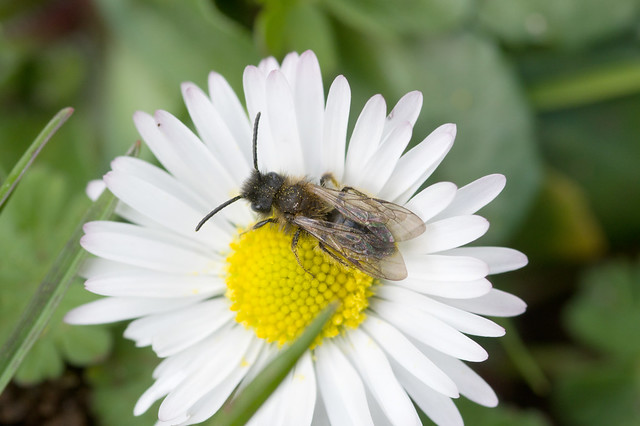
Yesterday was a bit of a treat, a day out surveying for bees with Rosie at the RSPB reserve at Farnham Heath. It's one of the premier sites in the country for aculeate hymenoptera (bees, non-parasitic wasps and ants) with a list of well over 200 species. Our aims for the day were twofold. Firstly we wanted see how many species we could find, and to see how this compared to a previous survey in 2002 which was conducted around the same time of year, but when a lot of the site was still under conifer plantation. Secondly we wanted to see if we could refind the extremely rare
Lasioglossum sexstrigatum, which has still only been found in a handful of sites in the UK since
arriving in 2008.
We failed on the latter, but we're optimistic that by the time all the specimens have been identified we'll have amassed a list that will show the benefits of restoring the heathland. Aided by local experts Tom and David we immediately started finding species I'd never seen (or in some cases heard of) before. Some felled trees near the entrance to the reserve provided the first interest of the day, their upturned root plates providing a vertical profile like a miniature cliff, perfect for nesting bees like the tiny
Lasioglossum parvulum. Where you find nesting bees, you often find their parasites, and in this case they outnumbered their hosts, with a small swarm of the smallest Nomad bee in the UK,
Nomada sheppardana, loitering around the nest holes.
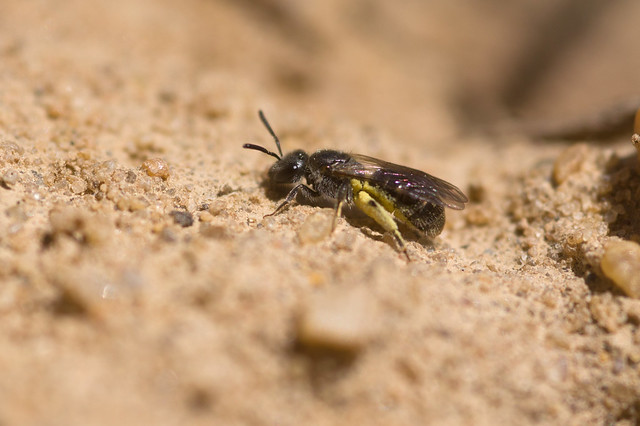 |
| The diminutive Lasioglossum parvulum |
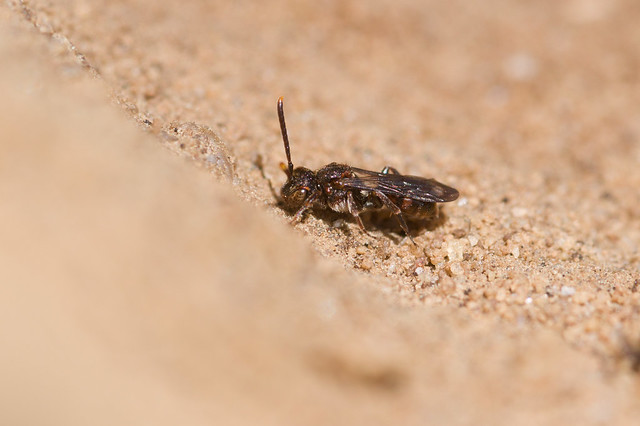 |
| Its equally tiny cuckoo bee Nomada sheppardana |
Moving further into the reserve we were sound being treated to a masterclass in bee identification, as Tom and David demonstrated some impressive field knowledge in putting names to a range of Lasioglossum species which look almost identical at first sight. Final identifications will come from examination under the microscope, but we probably added
L.morio,
L.smeathmanellum,
L.leucozonium and
L.prasinum to the day list in a matter of minutes.
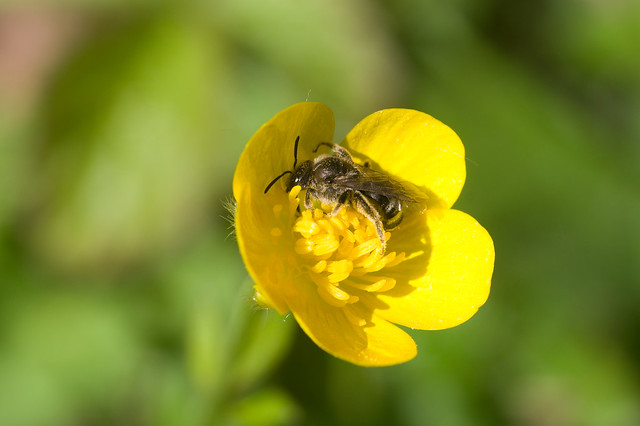 |
| Lasioglossum leucozonium, refueling shortly after being released |
After that the new species continued thick and fast, heading up a sandy track to the accompaniment of Woodlarks singing and a Red Kite swooping past, before stopping at a patch of bilberry where we added a few bumblebee species, including the heathland specialist
Bombus jonellus, I finally found my first hoverfly for the day with my first
Volucella pellucens of the year, before that was well and truly trumped by Tom presenting me with a
Seriocomyia silentis in a tube - a hoverfly that I've been wanting (and failing) to see for ages. After than my first Gorse Shieldbug for a couple of years was a bit over-shadowed!
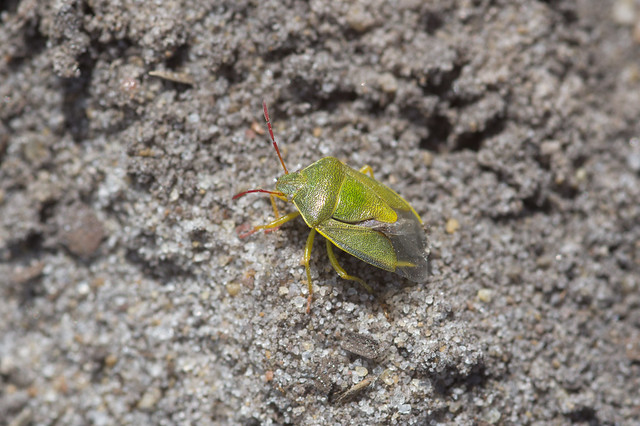 |
| Gorse Shieldbug |
Heading downhill again, we found a few more flowers growing by the side of the track, and with them a new set of bees, including the dazzlingly blue
Ceratina cyanea, followed by a lovely female
Andrea labiata, with its black tipped red abdomen making it look like a giant version of the many
Sphecodes cuckoo bees that were patrolling the heath. Tom also found another cracking non-bee with the spectacular long-horned beetle
Rhagium bifasciatum.
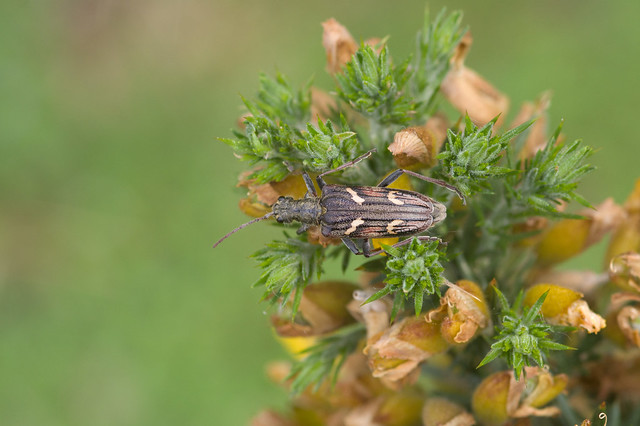 |
| Rhagium bifasciatum |
After a bit more wandering we ended up at our final site for the day, a large flowering holly that was attracting a range of bees and other insects, including a slightly battered Green Hairstreak and one of the better wasp mimicking hoverflies, Xanthogramma pedissequum.
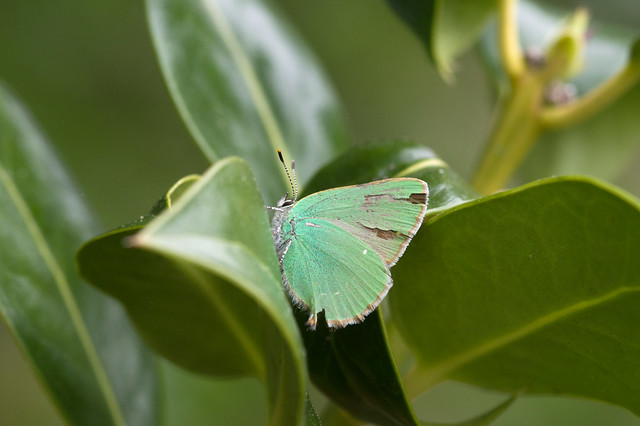 |
| Green Hairstreak that's been in the wars |
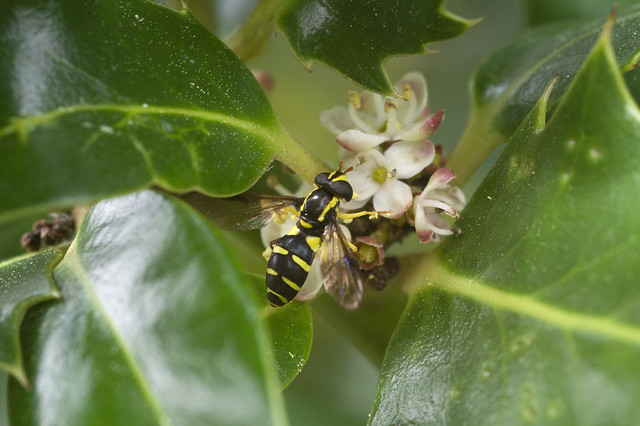 |
| Xanthogramma pedissequum |
We're hoping to make a return trip in July to see an even wider range of species, and to hunt for the enigmatic
Chrysotoxum octomaculatum, one of the rarest hoverflies in the UK, found only on heathland in Surrey and Dorset (where I also have some adventures planned :) )