Showing posts with label garden. Show all posts

Sunday, 15 May 2016

A nomad in the garden

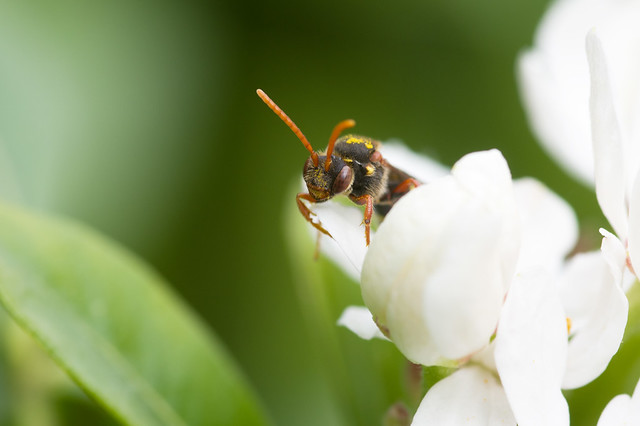
A species that I've wanted to see for a while is the cuckoo bee Nomada marshamella, but until now every one I've found locally has turned out to be one of the other common species like goodeniana or flava. That changed yesterday when I had a quick check of the hedge in the front garden and spotted a large  unfamiliar looking Nomad on a flower. I quickly grabbed a pot, and helped by the cool temperature was able to easily capture the bee for closer inspection.

It was quickly obvious that this wasn't another goodeniana, the scutellar spots and tegulae were both orange rather than yellow, and on closer inspection the yellow band on tergite 2 was broken. Consulting with the superb Field Guide to the Bees of Britain and Ireland it was quickly apparent that I had my first N.marshamella, result! With the Id confirmed I released the bee back onto the same hedge and she obligingly hung around for a few photos before flying away.
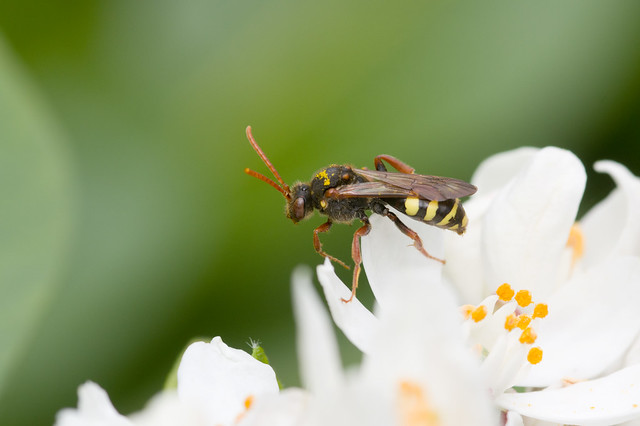
Nomada marshamella (f)
Nomada marshamella
Nomada marshamella (f)
Nomada marshamella
The Nomada bees are a fascinating group of around 850 species worldwide, of which 29 make their home in the UK. They're all cuckoo bees, laying their eggs in the nests of other bee species, where they hatch out before the host eggs, and devour the stores of food left there by the host mother. The hosts are often Andrena bees, as in the case of N.marshamella which is a cuckoo on Andrena scotica, but other bees such as Melitta and Lasioglossum are also used.

Identification is often tricky, although most Nomads are boldly marked with combinations of reds, blacks, yellows and whites, several species often share the same colour scheme, marking morphological features such as the shape of the mandibles key to clinching a confirmed Id. Association with a host species can also help narrow down the choices, but as many species of solitary bees will often nest in close proximity, and several Nomad species will use the same hosts, it's far from a guaranteed method.
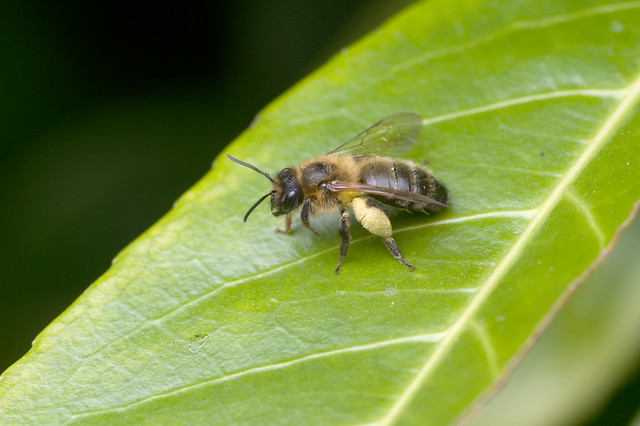
Andrena scotica (f)
Andrena scotica, the host of N.marshamella
Nomada marshamella is the tenth species of these fascinating little bees I've seen, so just another 19 to find. A few of those species are extremely rare, but looking for them would take me to some lovely places, so I'll be happy to keep on searching for them.

Sunday, 10 January 2016

Inevitable springtails

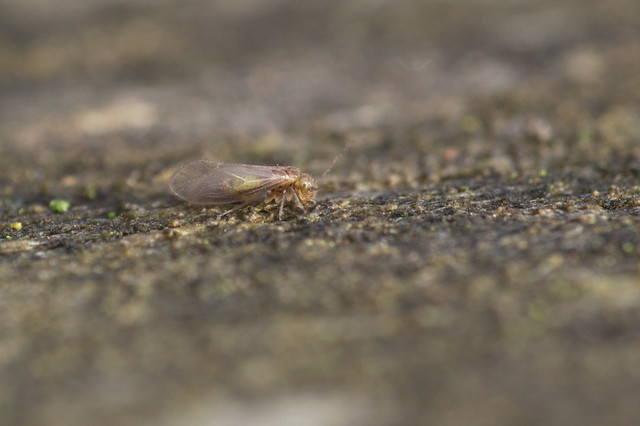
There are few certainties in a year of wildlife watching, but one of them is that, at some point in January, I'll get fed up of not seeing any insects, and go springtail hunting. Well today was that day for 2016, with the weak winter sunshine enough to tempt me out into the garden. The first insect to hove into view was not a springtail though, but instead a barkfly, a less troublesome relative of the booklice.

This one didn't look like any of the, admittedly limited in number, barkflies that I've seen before, so I headed to the UK barkfly recording scheme website to see if I could figure out what it was. It turned out to be a fairly distinctive species, Trichopsocus brincki, which according to the website is a scarce species in England and Wales.

Trichopsocus brincki


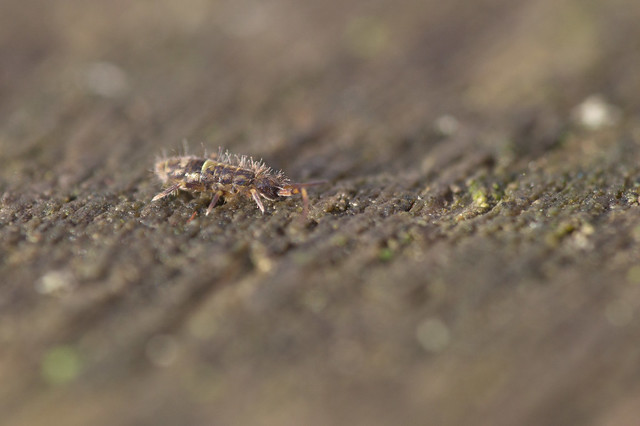
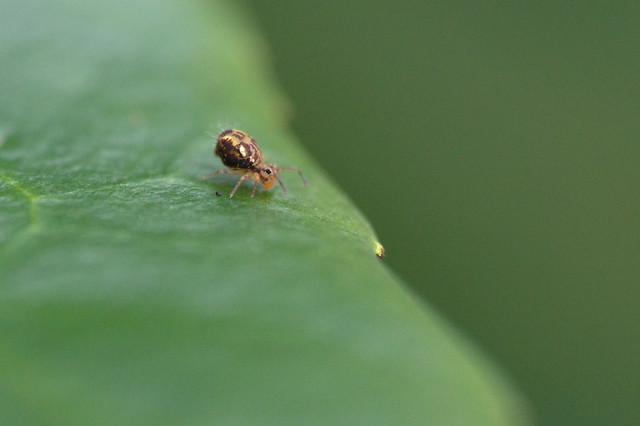
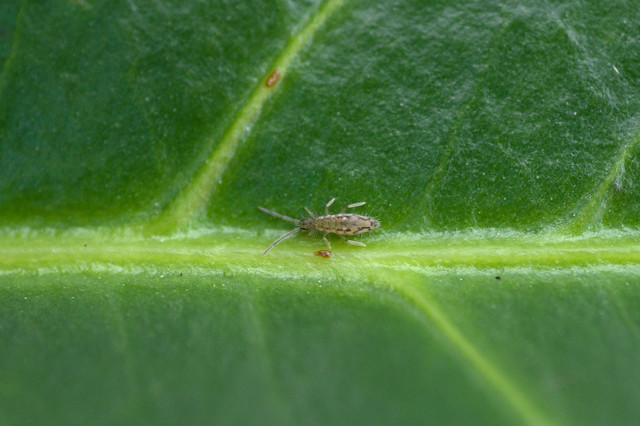
Flush with that success I soon found and took some bad photographs of my first springtail of the year, the linear species Orchesella cincta, with its distinctive dark band. On a nearby bush I found another couple of species, a cute little globular Dicyrtomina species, and another linear species Entomobrya intermedia. The Collembola pages on the University of Roehampton website are a very useful resource for information on these tiny but fascinating insects.

Orchesella cincta
Orchesella cincta

Dicyrtomina
Dicyrtomina species (I susspect ornata, but the dark marking at the back of the abdomen isn't visible enough to be certain)

Entomobrya intermedia
With that my time was up and I headed back inside, pausing briefly to photograph another barkfly that had landed on the back door. The photos are too rubbish to bother showing, but showed enough detail to allow to identify it as the common species Ectopsocus briggsi, my second new barkfly of the day!

Tuesday, 29 December 2015

More Mid-Winter Moths

After a few nights away from home for Christmas I decided to stick the moth trap out again last night, as the weather is still ridiculously mild for the time of year. Sure enough a total of five moths were attracted to the trap, with a mixture of winter and spring species.

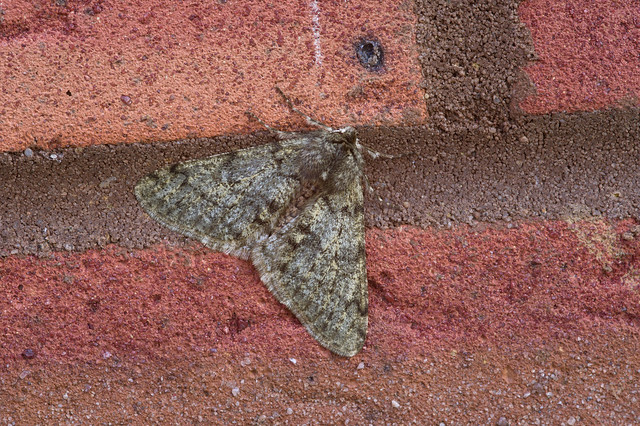
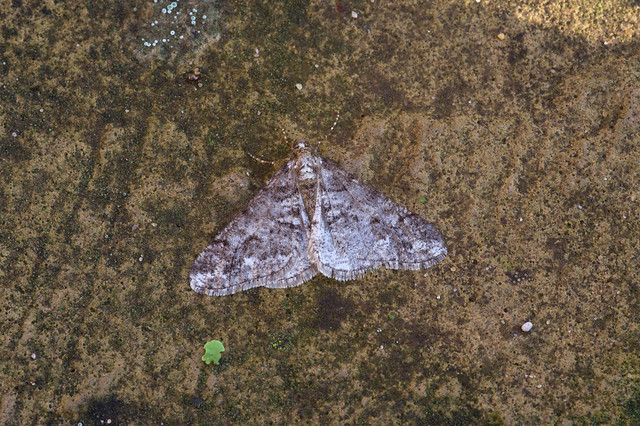
Representing winter was a single winter moth, the first I've caught in this garden, and also a Chestnut and a Mottled Umber. From the spring range of moths there was a single Pale Brindled Beauty, which I'd normally expect to start catching in February, and a Spring Usher, which as the name suggests doesn't usually fly in mid-winter!

Pale Brindled Beauty
Spring Usher
Spring Usher
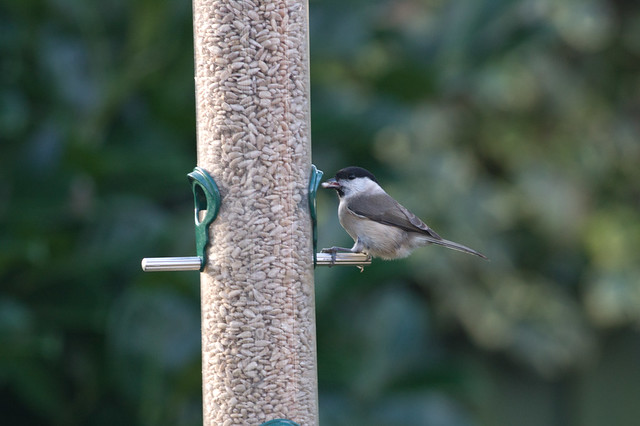
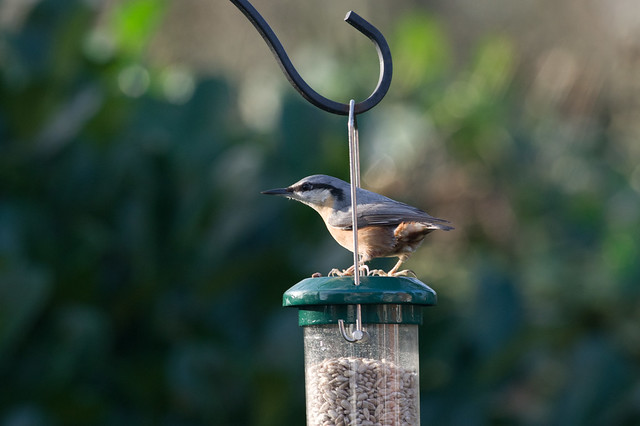
I also refilled the bird feeders which had been thoroughly emptied in my absence, and a little while later did a double take at what at first glance looked like a beige Great Tit - the first Marsh Tit for the garden! I quickly set up the camera to take some bad photos, and got an unexpected bonus when the first Nuthatch for the garden also dropped in. Hopefully they'll stick around until big garden birdwatch weekend!
Marsh Tit
Marsh Tit

Nuthatch
Nuthatch