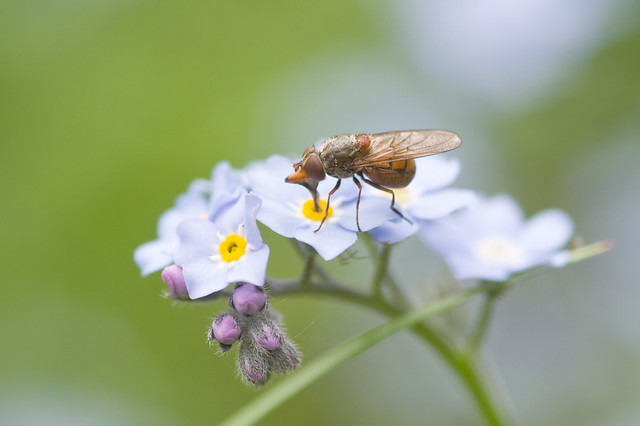
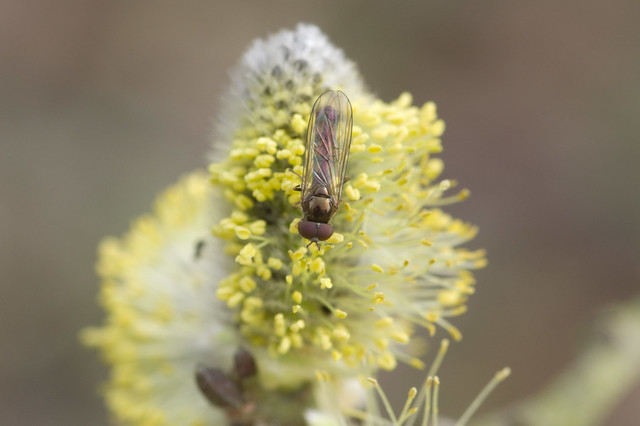
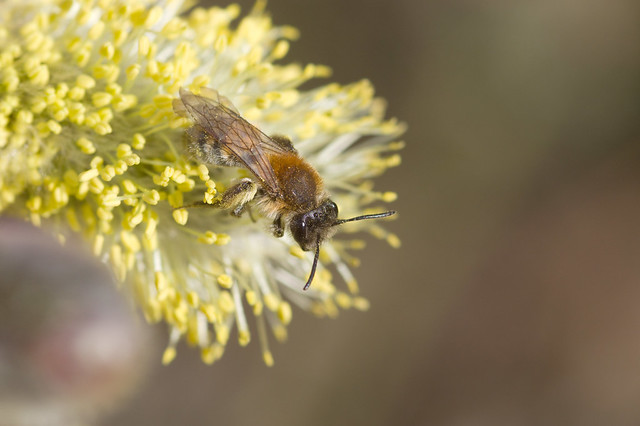
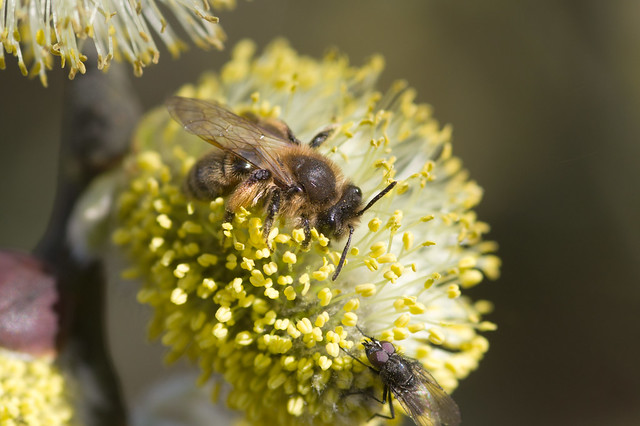
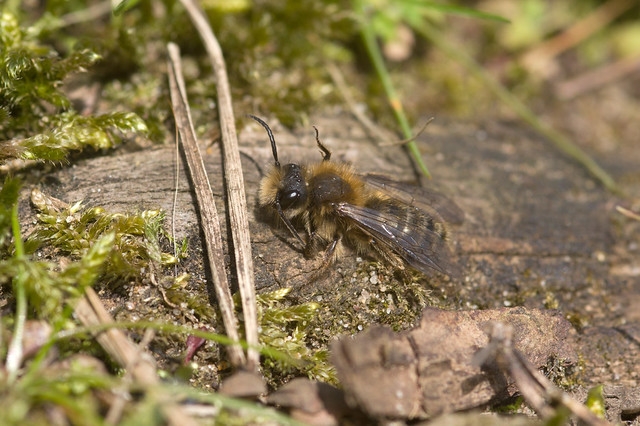
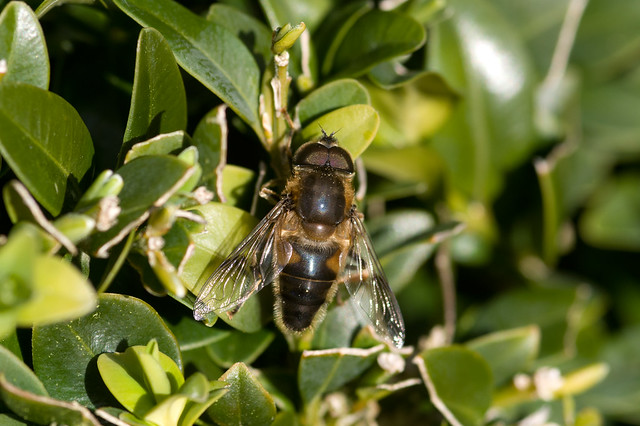
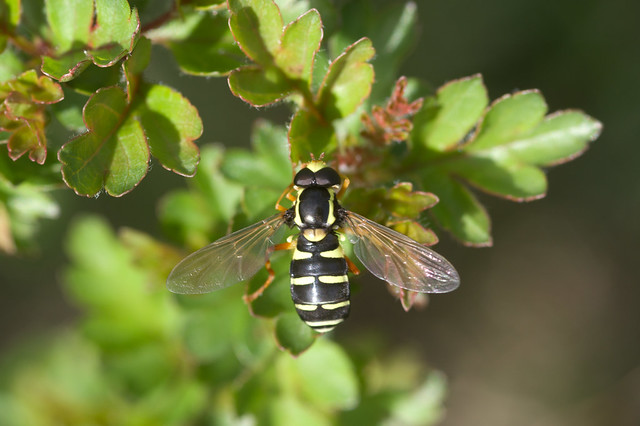
Showing posts with label hoverfly. Show all posts

Wednesday, 8 June 2016

Flies in the garlic

We're up in the Lake District this week, enjoying the sudden outbreak of summer after a miserable spell of weather. There hasn't been too much time for wildlife chasing, although there are few more pleasant ways of spending one's time than watching Grey Wagtails chirruping on the river's edge whilst supping a pint of Cumbria's finest ale as I did today.

From the moment that we settled on the plan off staying in the Lakes I've had my eye on one particular species that I've had on my 'to see' list for a while now, the hoverfly Portevinia maculata. It shouldn't be a tricky species to find, as it loves Ramsons - which carpet many woodlands in springtime, but unfortunately not any woodlands near home that I'm aware of. Around here every wood seems to be carpeted with them, so we set off this morning to the charmingly named Dorothy Farrar's Spring Wood in search of some garlic loving hoverflies.

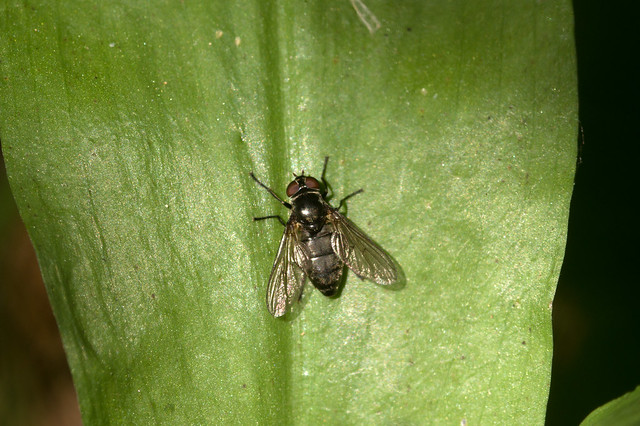
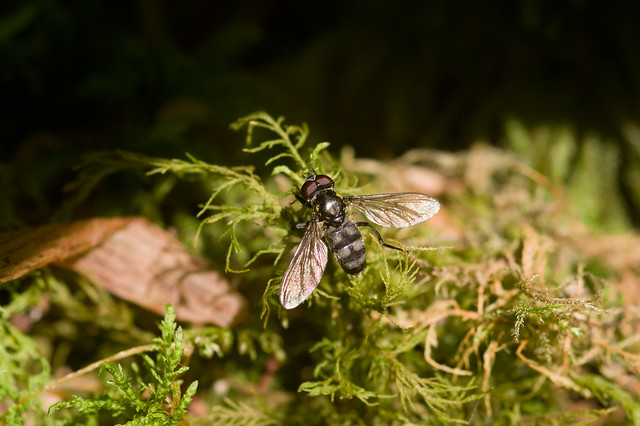
The only fly in the ointment is that it's getting a little late in the year for the Ramsons, and with them the hoverflies, and after a little while in the wood I was starting to think that perhaps our hunt wasn't going to be successful. Just as I was starting to lose hope I caught sight of a small hoverflyey looking fly on a Ramson leaf and quickly brought up my camera to take some photos, and managed to take a grand total of one before the battery died - aargh! A quick faff later I had a new battery loaded, and thankfully the fly had stayed put, allowing me to get some nice shots of a female Portevinia - usually the harder sex to find. A few minutes later I added a male, with its distinctive square grey abdominal markings, to the set as one posed nicely on a sunlit patch of moss.
Portevinia maculata
Female Portevinia maculata

Portevinia maculata
Male Portevinia maculata
I think this probably counts as my first ever hoverfly twitch, but it almost certainly won't be my last, I've got a much harder target to aim for in the next couple of weeks - hopefully I'll be posting about that soon!

Saturday, 7 May 2016

A day of hoverflies

In just over a month's time I'll be heading up to the highlands in search of the rare and enigmatic Pine Hoverfly. Finding any of them is likely to be a challenge, so today I did a bit of training in the company of Joan, a local hoverfly expert. We spent the bulk of the day underneath a couple of beautiful cherry trees that are in full flower, netting and identifying all the hoverflies that we saw, and we saw a lot of hoverflies!

First in the net was a cracking Melangyna cincta, a hoverfly which I've been wanting to see for a while without any success - a good start, and it soon got better with Dasysyrphus tricinctus popping in for a visit, another lifer. Remarkably Joan then netted a hoverfly that wasn't just a lifer for me, but for her as well, the diminutive Parasyrphus annulatus, one of a group of similar looking species, looking a look like a mini Syrphus, all of which seem to have declined in recent years, so it's good to know there's still some at The Lodge. Slightly less dramatically, I added another lifer in the shape of a male Platycheirus scutatus, one of a large number of very similar looking species which I've never really got to grips with before.

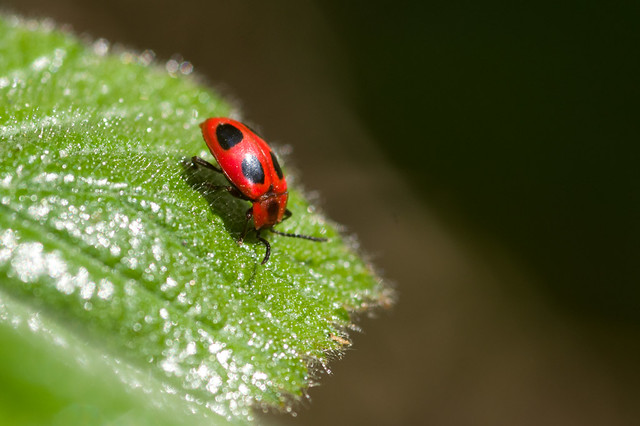
Amongst all the hoverflies, a nice surprise was a False Ladybird, a shining gem of a beetle which is more usually found underneath dead wood, munching on fungi, but clearly had got carried away with the sunshine and decided to do some sunbathing.

False Ladybird
False Ladybird
After that distraction we got back to the hoverflies, and the list get ticking over with common species like Epistrophe eligans, Neoascia podagrica, Melanostoma scalare and the lovely Leucozona lucorum bolstering the total. As the temperature continued to rise, activity started to drop, so we decided on a quick stroll around the gardens, where we added another lifer for the day in the shape of the buttercup loving Cheilosia albitarsis. After that lunch arrived in the company of my better half and the scrambling ball of chaos that is my daughter, suitably kitted out in a bee patterned t-shirt.

Leucozona lucorum
Leucozona lucorum, one of the best looking hoverflies in my opinion
After lunch a bit more hoverflying turned up a few more species around the pond in the woods, including the first Myathropa florea and Rhingia campestris of the year, and the briefest of views of my second ever Criorhina ranunculi, plus few ripples and a blur of fur that was probably a Water Shrew. By the time we called it a day we'd racked up a list of over 20 species, five of which were new to me, and I'd also had a great chance to learn a lot more about a lot of species that I've previously found a bit daunting. Hopefully I'll be able to put the experience to good use up in Scotland, and everywhere else I go hoverflying in future.

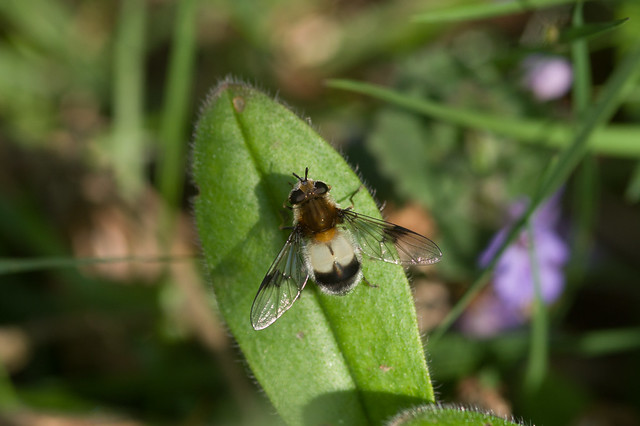
Rhingia campestris
Rhingia campestris, I always think of Plague doctors' masks when I see these!

Friday, 1 April 2016

More hanging around sallows

After a nice long Easter break it was back to work yesterday and today, but that came with the consolation of being able to check out the sallow on the heath, which has come nicely into flower. I was hoping for another new hoverfly, perhaps a Cheilosia grossa, but the only hoverflies to be seen were a solitary Parasyrphus punctulatus and a Melanostoma scalare, both common spring species.

Melanostoma scalare (m)
Melanostoma scalare
There were a few more bees buzzing around, possibly more able to fly in the chilly air with their furry coats, including a lovely female Andrena praecox, the small sallow bee. As the name suggests this is a specialist on sallows, the females will only collect pollen from this one tree, they are oligolectic to use the technical term.

Andrena praecox (f)
Andrena praecox - a nicely distinctive bee
On Thursday there was also a larger Andrena on a catkin, which I think might be a female A.bimaculata. I've not seen it before, and I briefly dismissed it as another honey bee, before thankfully deciding to give it a second look. They look very similar to a number of other Andrena species though, and I'm not quite sure that it's not an Andrena trimmerana, unfortunately I don't think the key characteristics are visible in my photos. In an attempt to clinch an ID I went back to the sallow today with Rosie, armed with our nets, but there weren't any female bees around to catch. We did bag a couple of male Andrenas though, which might fortuitously be one each of bimaculata and trimmerana, we'll take a look under a microscope to check. (Edit - I've now had the ID of the female confirmed as bimaculata, and the males were indeed one of each - very efficient netting!)

Andrena bimaculata (f) ?
Andrena bimaculata
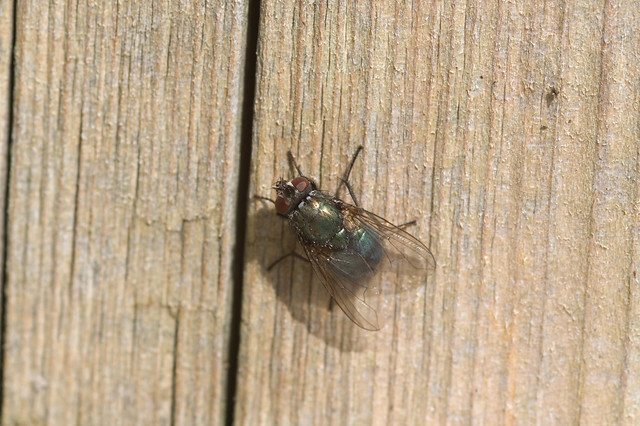
Elsewhere on the heath things are pretty quiet, as there aren't many other sources of nectar or pollen around. The fences did attract a good number of basking flies, including a single Eudasyphora cyanella, a species I'd never heard of before this year before seeing some photos on the UK Diptera facebook group. Once you know to look for the black and white markings at the top of the thorax, they're actually quite distinctive.

Eudasyphora cyanella
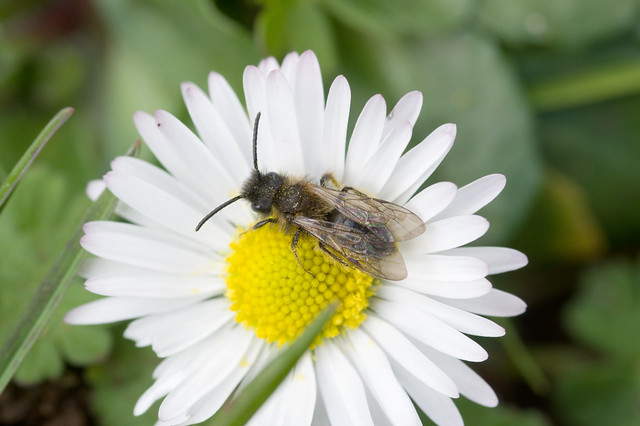
The gardens are buzzing with bumblebees, including the first Red-tails I've seen this year, and on a daisy a single dimunitive male Andrena bicolor was taking a rest. These are one of the easier male Andrenas to identify, with the combination of their small size, spindly build and black hairs on the face making them quite distinctive.

Andrena bicolor (m)
Andrena bicolor

Tuesday, 29 March 2016

Record shot

I suspect the term record shot hasn't made it into the Oxford English Dictionary, but if it had I'd imagine it would say something like "a photograph which acts as a record of, or aid to identification of, a species". Record shots might be a fine photograph in their own right, but more often the term is attached to a photograph as a kind of apology for its aesthetic deficiencies. My trip to Potton Wood this afternoon produced as fine an example of the latter as you are ever likely to see.

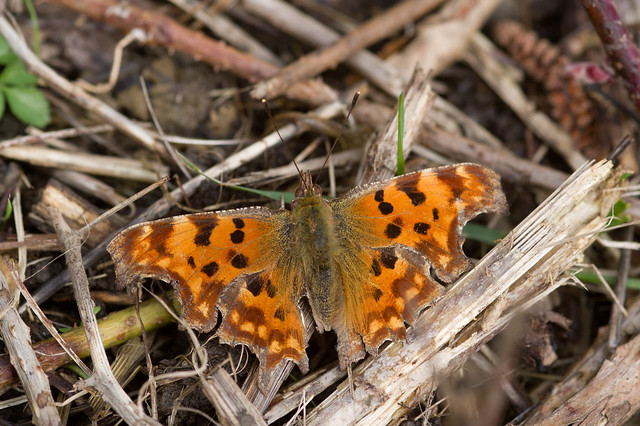
With an unexpected free hour becoming available, and the sun shining, there was only one place I was likely to head, especially as now is the time of year to start cracking some of those new year resolutions. Specifically, I was hoping to find the bumblebee mimicking hoverfly Criorhina ranunculi, one of my resolutions from my 2015 hoverfly review post. Initially things didn't look too promising, a lot of the sallows weren't really flowering yet, and the few that were, were way out of reach in the canopy. As I pressed on into the wood there were at least some hoverflies to look at, the common Eristalis pertinax seems to be having a particularly good spring. I also allowed myself to be briefly distracted by my first butterfly of the year in the shape of a slightly worn out looking Comma, and a collection of odd looking fungi which turned out to be stump puffballs.

Eristalis pertinax
Eristalis pertinax

Comma
Comma

Stump Puffball
Stump Puffballs
Deep in the woods I came across a sallow that seemed much further into flower than the others, even if the nearest flowers were still significantly above head height. I decided to hang around and see what I could see, as there were clearly lots of insects being attracted. These were mainly bumblebees, Buff-tailed, Early, Tree and Garden, but amongst them I noticed a smaller yet still fluffy looking silhouette. It looked distinctly promising for a Criorhina, but was clearly not going to come any closer, so I pointed the camera in its general direction and took a load of photos.

The initial results looked something like this, with the fly a mere speck in the centre of the image.


A judicious bit of cropping later though, and enough detail remains to be clear that this is indeed a Criorhina ranunculi.

Criorhina ranunculi, with the red tail and pale hairs on the thorax clearly visible
Criorhina in silhouette, the distinctive face shape and colour, as well as the antennal shape, show well
 being able to do things like this makes me very grateful to live in the age of digital photography. 20 years ago I'd have been lugging a film camera around, and not about to waste an entire roll on the off chance that I might be able to identify a single insect, and even 10 years ago, the digital cameras that were around probably wouldn't have captured enough detail to make identification possible.


Monday, 14 March 2016

A zebra in the sunshine

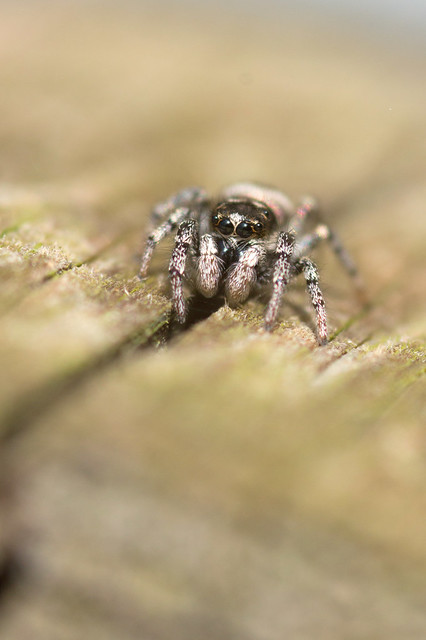
After a few weeks of icy temperatures, the weekend brought a change in the weather, with prolonged spells of sunshine sending the mercury heading for the dizzying heights of double figures. I was itching to get outside today to see what effect all this spring-like weather was having, and practically ran out of the office at lunchtime. It didn't take too long to find the first creature enjoying the sunshine, a beautiful male Zebra jumping spider hunting for prey on a fencepost. I think this is a male Salticus scenicus, but it seems tricky to tell these from the other Salticus species, so perhaps best to err on the side of caution.

Zebra Jumping Spider
A cute Zebra jumping spider

Onto the heath, and although the magic sallow is yet to put out its catkins, the Andrena clarkella colony was starting to get going, with 10 or so males alternately sun-bathing and searching for females. To my surprise, one female had made an early appearance (they usually emerge a bit later than the males) and was promptly jumped on by two males, eager to secure their genetic passage into the next generation. 

Andrena clarkella (m)
Male Andrena clarkella
In the gardens a first Eristalis pertinax for the year was nice to see, with the distinctive body shape showing why this species is sometimes known as the Tapered Drone-fly. The winter heather is always a great place for recently emerged queen bumblebees, and no fewer than four Buff-tailed Bumbles were joined by a single Tree Bumblebee, Bombus hypnorum, which has become such a familiar sight in recent years it's easy to forget that it only arrived from the continent a decade or so ago.

Eristalis pertinax
Tapered Drone-fly, Eristalis pertinax

Tuesday, 22 December 2015

Top 10 Hoverflies 2015

Hoverflies are a great introduction to the wonderful world of British insects, being easy to find, brightly coloured (in some cases!) and generally fairly accessible to the novice recorder, which I definitely am. In addition there is a wonderful community of people happy to help out with identifying photos and generally offering assistance through the UK Hoverflies facebook group, I highly recommend joining!

As the year draws to a close I thought I'd have a look back over some of the best hoverflies I saw this year, and look forward to some more hoverflying next year.

10: Xanthogramma citrofasciatum

A trip to the downs to look for Duke of Burgundies was unsuccessful, but my first ever sighting of this chalk grassland specialist was a fine consolation. Superficially similar to the widespread X.pedissequum, this is a larger fly, with contrasting orange legs and thinner stripes on the abdomen.

Xanthogramma citrofasciatum

9: Leucozona lucorum

Not a rare species by any stretch, but one I'm always pleased to see, and I was particularly pleased to see it in my new garden, and to get some nice pictures of it as well. For a few weeks these were a constant presence on the forget-me-nots, along with lots of Playcheirus albimanus
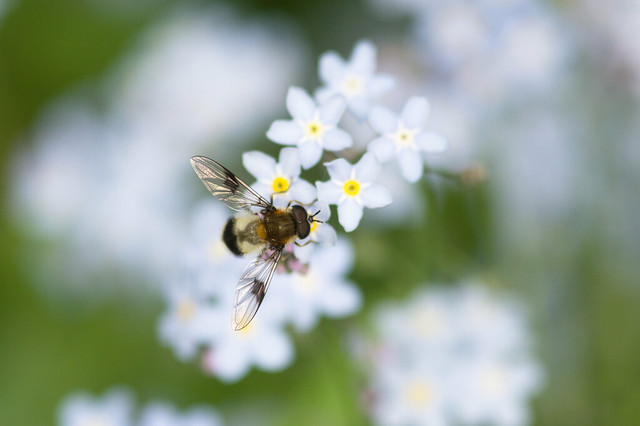
Leucozona lucorum

8: Dasysyrphus pinastri

The gardens at The Lodge RSPB are a fantastic location for hoverflies, and will feature a few times in this post. On 17th June this year I'd already found some nice species on the main flowerbeds when my eye was drawn to a slightly different looking hoverfly on a buttercup. It had the thin yellow curves of a Dasysyrphus, which on closer inspection proved to stop before the sides of the abdomen, meaning that this is Dasysyrphus pinastri, a new species for me. (there's a small chance it's the similar looking D.pauxillus, which has only recently been added to the UK list, but the colour of antennae suggests pinastri.
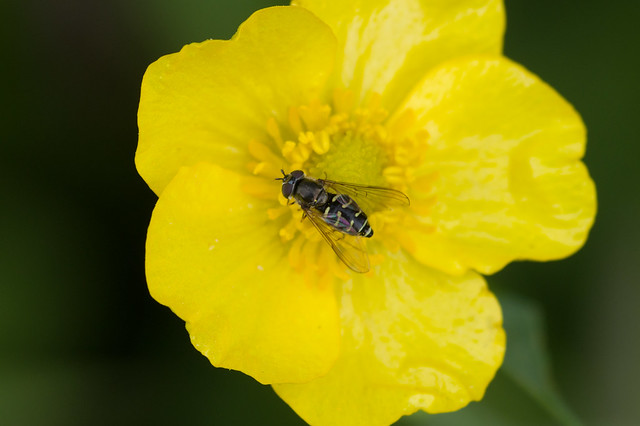
Dasysyrphus pinastri/pauxillus

7. Volucella bombylans

A break from The Lodge, and a journey down to the south-west for a few hoverflies from a week in Cornwall at the end of June. First another fairly common species, but one that I always enjoy seeing, with its excellent bumblebee mimicry.
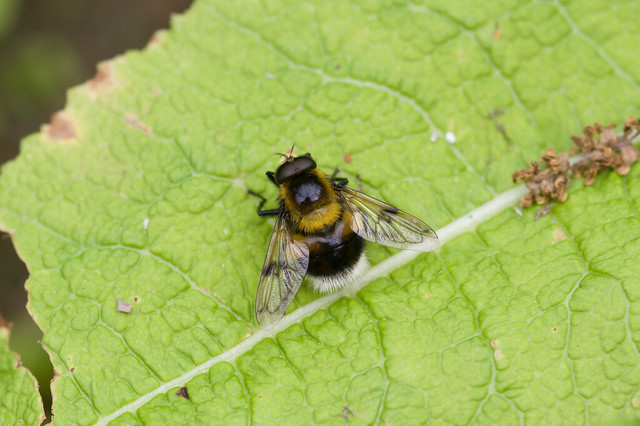
Volucella bombylans

6. Chrysotoxum elegans

Still in Cornwall, and strolling down the coast path on the Roseland peninsula I noticed a Chrysotoxum flying low over the path, and managed to get a quick photo before it flew off again. More by luck than judgement I managed to get enough of the fly in focus to be able to tell that this is Chrysotoxum elegans, a south-west speciality and a first for me.
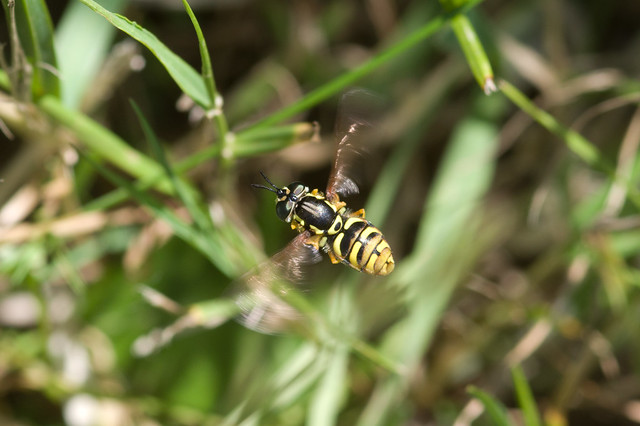
Chrysotoxum elegans

5. Ferdinandea cuprea

Probably the hoverfly I was most excited to see all year. After seeing loads of photos of these on the facebook group I was getting increasing irritated by my inability to find one, so I was very excited when a shiny fly on the trunk of a tree at Trelissick Gardens turned out to be Ferdinandea cuprea. It's a lovely looking hoverfly with a shining golden abdomen contrasting with the matt silver and black thorax. Like London buses another was soon along - I had one in my garden the week after!
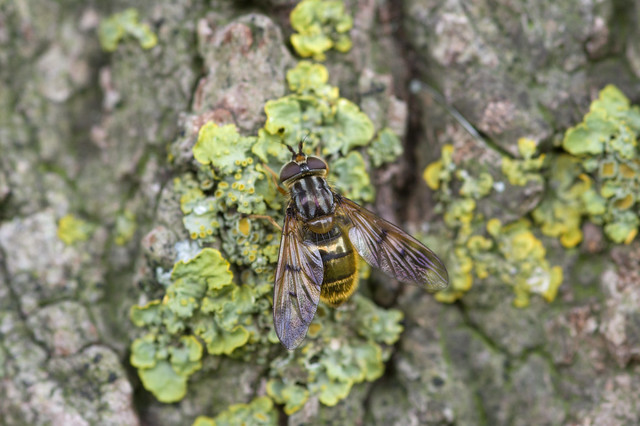
Ferdinandea cuprea

4. Eristalinus aeneus

The final entry from Cornwall, and a proper coastal specialist, whose larvae develop in seaweed. This one was found on soft rock cliffs on Pendower beach, where during the course of my explorations I also had the unusual experience of making an adder jump when I stepped round a corner and surprised it basking at the foot of the cliff.
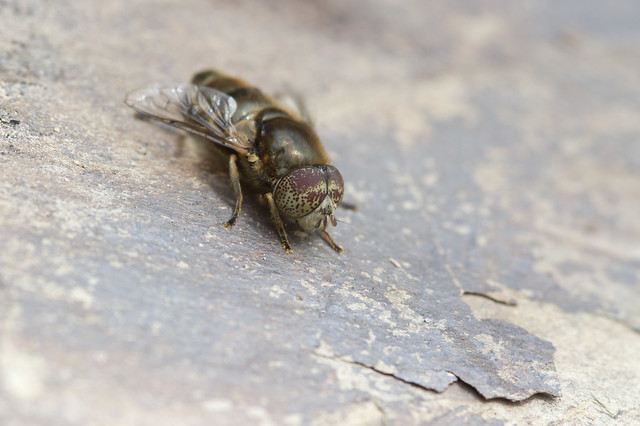
Eristalinus aeneus

3. Riponnensia splendens

Back to The Lodge for the next entry, a rather unusual looking hoverfly with distinctive orangey-green eyes. I'd never seen it before this year, but it seemed to be regular around the fennel in the gardens towards the end of August, so maybe I'd just over-looked it in previous years.
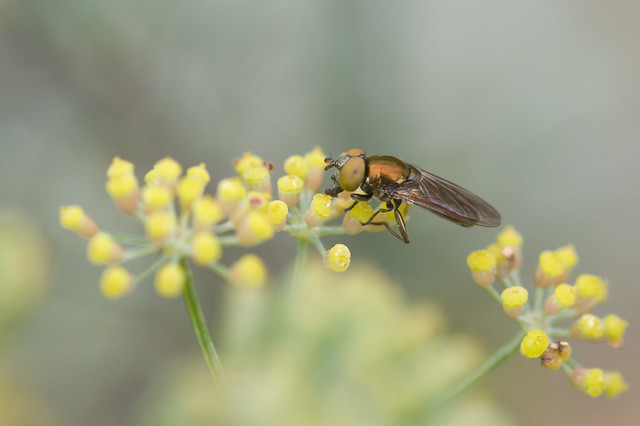
Riponnensia splendens

2. Cheilosia soror

A final entry from The Lodge, and the only Cheilosia to make the list, partially because I rarely manage to identify them. With a bit of help from the facebook group I got this one to Cheilosia soror, a localised species of southern england, with orange antennae and a two-toned scutellum. One of my aims for next year is to find and identify a few more Cheilosias, out of the 38 UK species I've only ticked off six!
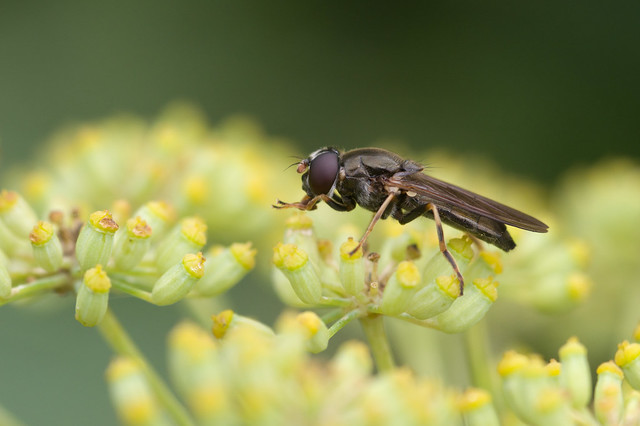
Cheilosia soror

1. Rhingia rostrata

The final entrant in my top 10 for 2015, and the wackiest looking of the lot. There are two Rhingia species in the UK, the common R.campestris which is a frequent sight in gardens, and the rarer R.rostrata, which I'd only ever seen once before this one turned up out of the blue in my garden. The two species are similar in appearance, both having the odd beak like projection, but rostrata lacks the black margin to the abdomen sported by campestris, and is a generally more brightly coloured fly. It was previously a rarity in the UK, but seems to have spread dramatically in recent years.
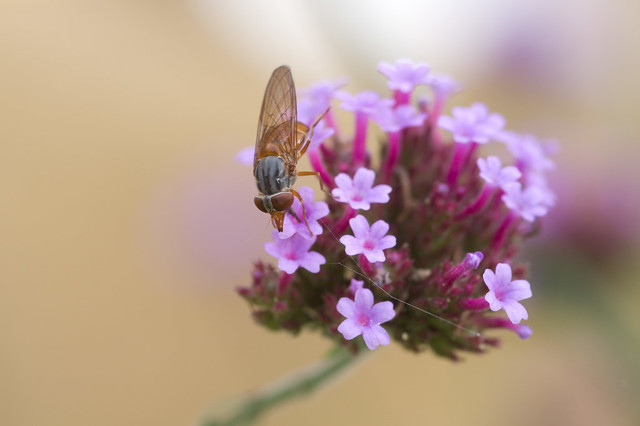
Rhingia rostrata

With 2015 pretty much over, my thoughts are turning to 2016 and what hoverflies I might be able to see. As I've already said, improving my Cheilosia list would be good, ten species seems like a good target. I'd also really like to see at least one of the Criorhina species, three spring flying bumblebee mimics that I've yet to find. Last but not least, I think I need at least one trip to a good wetland site, to look for species such as Tropidia scita and the Anasimyia species.