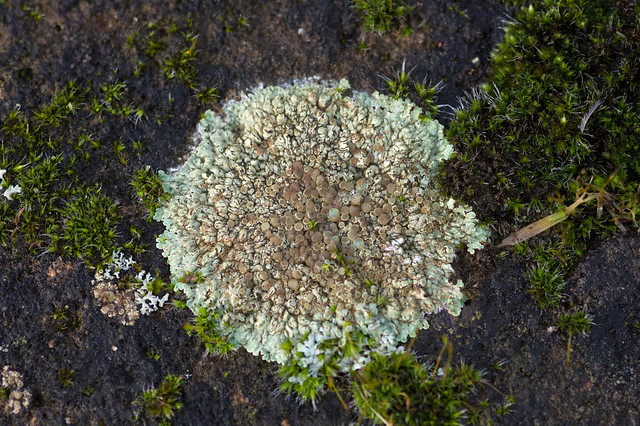
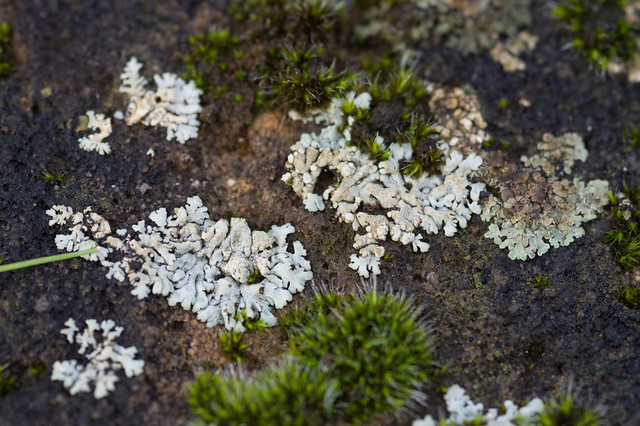
After a nice long Easter break it was back to work yesterday and today, but that came with the consolation of being able to check out the sallow on the heath, which has come nicely into flower. I was hoping for another new hoverfly, perhaps a
Cheilosia grossa, but the only hoverflies to be seen were a solitary
Parasyrphus punctulatus and a
Melanostoma scalare, both common spring species.
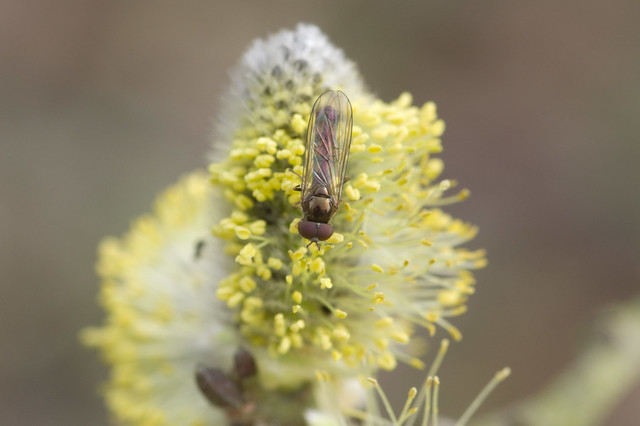 |
| Melanostoma scalare |
There were a few more bees buzzing around, possibly more able to fly in the chilly air with their furry coats, including a lovely female
Andrena praecox, the small sallow bee. As the name suggests this is a specialist on sallows, the females will only collect pollen from this one tree, they are oligolectic to use the technical term.
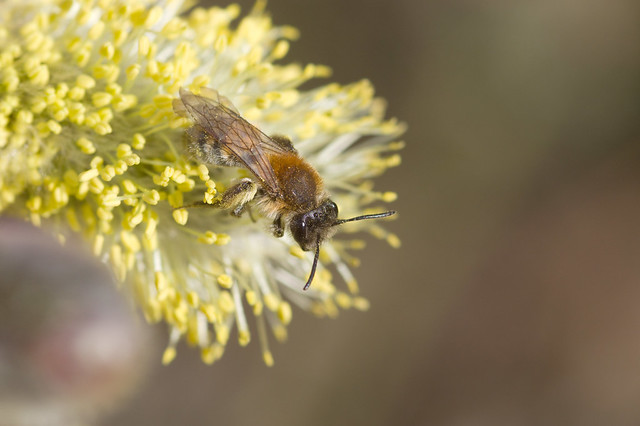 |
| Andrena praecox - a nicely distinctive bee |
On Thursday there was also a larger Andrena on a catkin, which I think might be a female
A.bimaculata. I've not seen it before, and I briefly dismissed it as another honey bee, before thankfully deciding to give it a second look. They look very similar to a number of other Andrena species though, and I'm not quite sure that it's not an
Andrena trimmerana, unfortunately I don't think the key characteristics are visible in my photos. In an attempt to clinch an ID I went back to the sallow today with Rosie, armed with our nets, but there weren't any female bees around to catch. We did bag a couple of male
Andrenas though, which might fortuitously be one each of
bimaculata and
trimmerana, we'll take a look under a microscope to check. (Edit - I've now had the ID of the female confirmed as
bimaculata, and the males were indeed one of each - very efficient netting!)
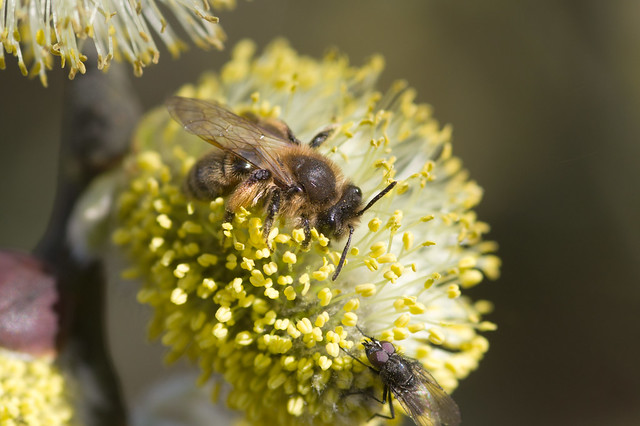 |
| Andrena bimaculata |
Elsewhere on the heath things are pretty quiet, as there aren't many other sources of nectar or pollen around. The fences did attract a good number of basking flies, including a single
Eudasyphora cyanella, a species I'd never heard of before this year before seeing some photos on the UK Diptera facebook group. Once you know to look for the black and white markings at the top of the thorax, they're actually quite distinctive.
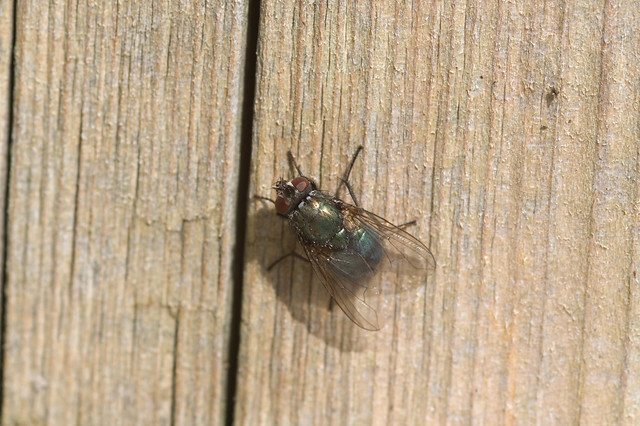 |
| Eudasyphora cyanella |
The gardens are buzzing with bumblebees, including the first Red-tails I've seen this year, and on a daisy a single dimunitive male
Andrena bicolor was taking a rest. These are one of the easier male
Andrenas to identify, with the combination of their small size, spindly build and black hairs on the face making them quite distinctive.
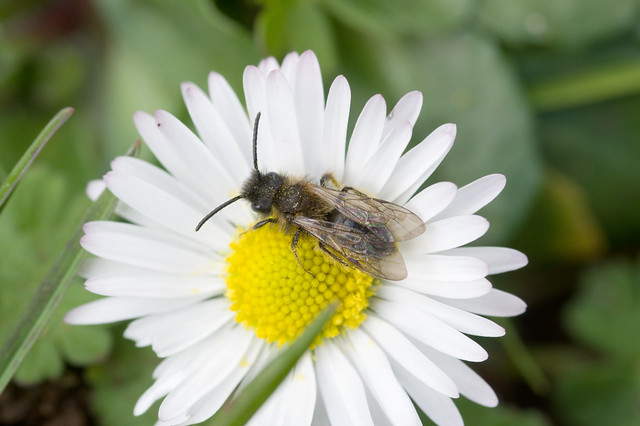 |
| Andrena bicolor |